
New York Gave America the Fight That Won Women the Vote
There is a specific kind of stillness that settles over you when you realize you're standing on ground where history actually happened, not just ground where a plaque says it happened. I felt that stillness in Seneca Falls, staring at the spot where the Wesleyan Chapel once stood.
Somewhere under my feet was the same dirt that a small, furious, determined group of women stood on in July of 1848 when they decided they were done being silent. I thought about every ballot I've ever cast, every time I've spoken up in a room and been heard, and I owed every bit of it to women who never got the chance to vote themselves.
The Convention That Started With Women Refusing to Stay Quiet
In July of 1848, the United States had never seen anything like it. Women who were tired of being treated like property, tired of being silenced, and tired of being treated as inferior organized the first women's rights convention the country had ever held. They picked a small town in Upstate New York called Seneca Falls, and their two days at the Seneca Falls Convention would change the course of American history.
The convention was the brainchild of Elizabeth Cady Stanton, who had reached her limit with being treated like property and expected to stay home and raise children without a voice of her own. Stanton reached out to Lucretia Mott, a Quaker preacher from Philadelphia, along with Mary M'Clintock, Martha Coffin Wright, and Jane Hunt, all women connected through Quaker activism and the abolitionist movement. Together, this small group became the primary organizers of what was first called the Women's Rights Convention and later became known as the Seneca Falls Convention.
It was advertised plainly as a convention to discuss the social, civil, and religious condition and rights of women, and it opened at the Wesleyan Chapel.
Two Days That Changed the Course of American History
Stanton opened the convention with a speech that still lands hard nearly two centuries later:
"We are assembled to protest against a form of government, existing without the consent of the governed, to declare our right to be free as man is free, to be represented in the government which we are taxed to support, to have such disgraceful laws as give man the power to chastise and imprison his wife, to take the wages which she earns, the property which she inherits, and, in case of separation, the children of her love."
The first day was reserved for women only. On the second day, the doors opened to men as well, and an estimated 300 people attended across the two days to discuss where women deserved equality, in politics, family, education, jobs, religion, and basic morals.
At the time, women were routinely denied education, expected to be obedient to their husbands, barred from owning property, and required to hand over any wages they earned. In divorce, they had no guaranteed rights at all, not even to their own children. The convention pushed back on all of it, but the demand that shocked people most was the boldest: that women deserved the right to vote.
The Long Road From Seneca Falls to the Right to Vote
That single demand became the cornerstone of the entire women's suffrage movement. It took 72 years, but on August 18, 1920, Tennessee cast the deciding vote that made the 19th Amendment to the United States Constitution law, and women finally won the right to vote. The Secretary of State formally certified the ratification eight days later, on August 26, 1920.
It all traces back to a little town in Upstate New York and a group of women who refused to let their voices be muffled.
Walking the Same Streets Where History Was Made
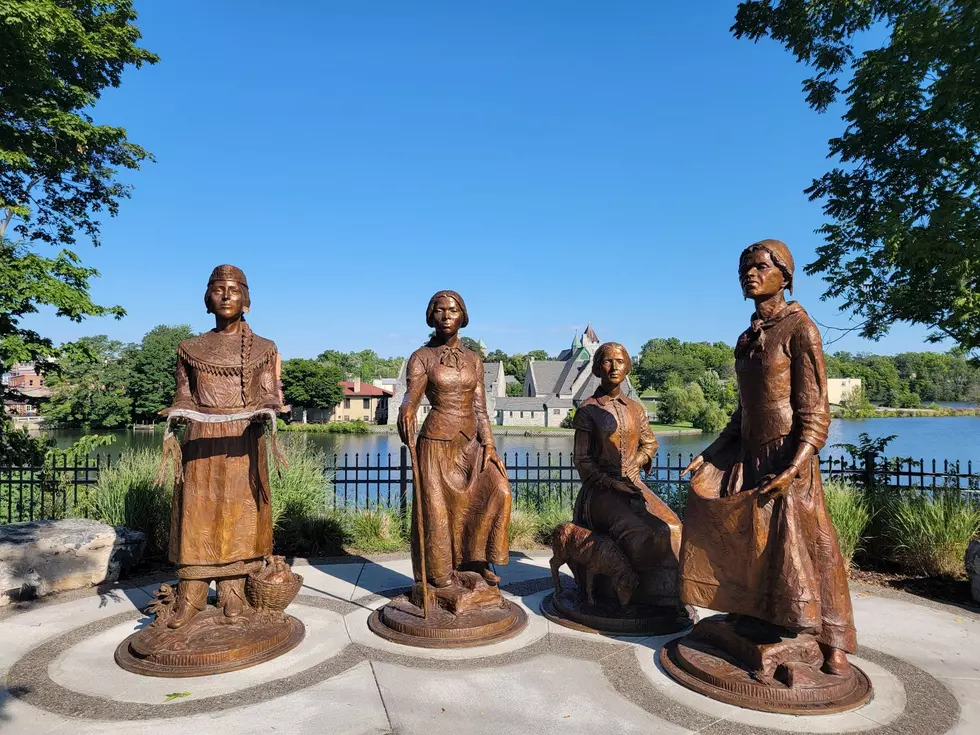
Visitors can still walk those streets today and feel some version of what I felt. Statues are scattered throughout town; the Women's Rights National Historical Park sits at the heart of it; the National Women's Hall of Fame is a short walk away; and tours run through what was once Elizabeth Cady Stanton's own home.

Standing there, I didn't feel like a tourist. I felt like I was standing in the middle of a debt I could never fully repay, to a handful of women who decided, on that ground, that silence was no longer an option.
Tour Seneca Falls - Birthplace of Women's Rights
Gallery Credit: Traci Taylor